Blog

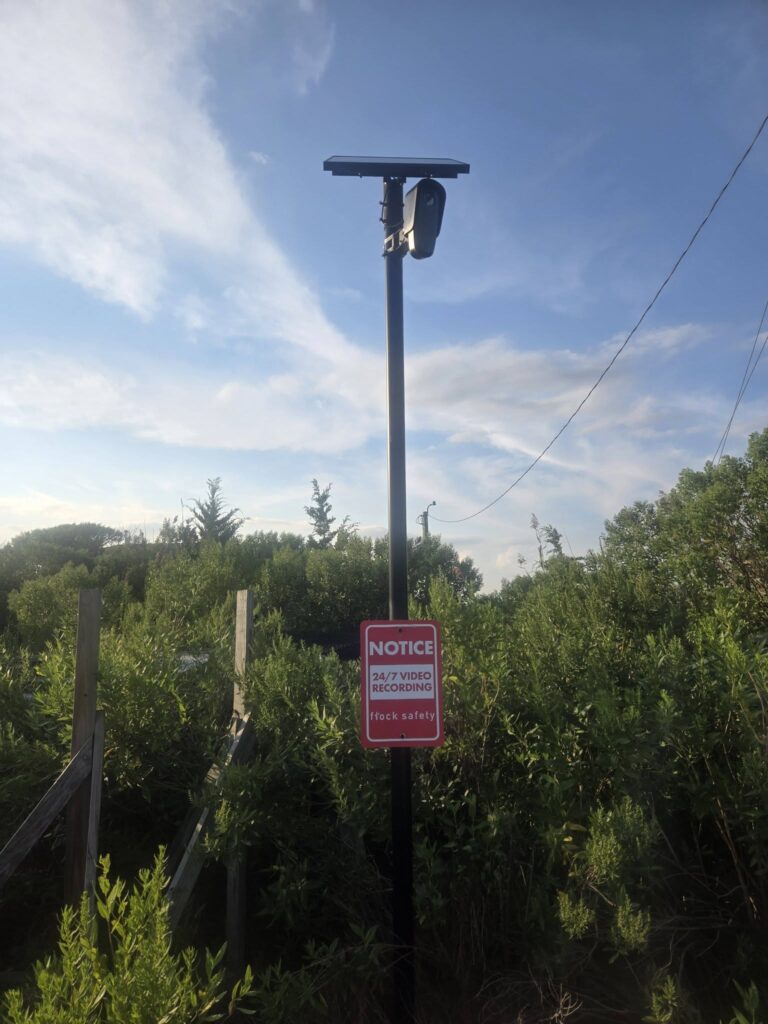
  • The Flock camera at my home

    I live at Money Island, NJ, a one-road town with six residents and a commercial port that supports about a dozen marine and fishing businesses. One dead-end road runs for miles to our waterfront community and stops at the water in front of my home and business. A second road crosses to the other properties. That is the whole town.

    This week a photo of my home with the Flock safety camera on it went around social media, and the response was harsh. I understand it. Here is how that camera got there.

    Our isolation, combined with the amount of valuable equipment here, made us a target. Crime spiked during the COVID shutdown. I lost much of my business equipment. Windows were shattered. Gates and locks were busted. Metal was ripped out and stolen from under my home. I was never able to afford to replace it, so some of the buildings, the rental boat business, and the fishing business never reopened. One night I walked into a break-in at a neighbor’s home without realizing what was happening, and I was physically attacked. My neighbor urged me to get a gun. For personal reasons, I did not. Better security was the alternative, and it was necessary for our survival here.

    We were not new to it. We installed videotape security in the 1990s, as many businesses did. Tape gave way to other storage, and we put up the generic signs announcing that the community was monitored. Whenever there was a disturbance, the state police or a neighbor would ask me for a copy of the recording. It was a burden. I never developed much skill with the equipment, and the recordings were often poor anyway. I used to joke that the system had a knack for malfunctioning right before anything important happened. I suspect some officers and neighbors did not believe me when I said I could not produce what they asked for.

    When remote monitoring arrived, I encouraged what I called community-based security. Neighbors could tune in from their own homes and watch activity at the scattered marina properties. The point was to take the pressure off me as the sole gatekeeper of the island’s security. People would text me when they saw something unusual. It worked better than anything I could do alone.

    Technology kept moving. At some point it became clear that the single most useful piece of information after a crime is a license plate, and my cameras were not good at capturing them. We asked around. Flock had the best plate cameras, so one went up on my building. I contributed money toward the cost. It worked well for years. Several crimes were solved with information it provided. Local government and police praised it. I mentioned it at a township committee meeting and everyone seemed pleased. I posted about it regularly, boasting that a rural town of six people had the best security monitoring anywhere around. I believed that the more people who knew about the camera, the safer we would be.

    Then the ground shifted. Over the past few years Flock has drawn serious criticism over how plate data is shared and used, and public feeling has turned hard against government surveillance in general. News reports indicated that data from remote cameras like ours was available to law enforcement nationwide. Our understanding of the power of AI grew. There are credible reports of abuse of the data. A large portion of the community is strongly opposed to Flock. Some politicians are discussing banning them outright. That is a different thing from what I thought I was installing, at a time when public trust in law enforcement is low.

    I should be clear about one thing, because the story does not make sense without it. I never signed a contract with Flock. Someone else’s name is on that agreement. I have spent forty years not discussing other people’s private business in public and I am not going to start now. What I can say is that the camera is on my property. Whatever that contract says, the equipment sits there because I allowed it and initially supported.

    In defense of Flock: I can look back now and say that the post-covid restoration of Money Island would not have begun so soon without the safety and security that Flock extended. The police could not help us. The government did not help with the cost of recovery from the covid era crime wave. Flock was (and maybe still is) the only system that can provide simultaneous real private and police protection including license plate identification to a vulnerable site like ours.

    I already stopped contributing to the cost of the Flock system more than a year ago and installed a better and more private camera system of my own. A few months ago I emailed Flock and told them the camera should come down. I gave them a reason that was easier than the real one: planned redevelopment of the site, which is still years away. They responded by citing a contract. I did not take the time to investigate further.

    I should have given them the actual reason, and I should have followed through. I will do that now. I will find out what the contract actually says, and I will decide based on that and give an answer to the community within the next week.

    I sat down to write this after noticing that the fear I felt years ago – the fear that made me install a state-of-the-art security system in the first place – has come back. This time the fear is coming from the hostile reaction of the community to the security system itself.

  • Nantuxent vs. Autuxit

    Nantuxent vs. Autuxit

    A local word is coming back, and it is older than I assumed. A small change is happening in how people around here describe where we live.

    The word “Autuxit” is turning up again. A friend sent me notes about it last year. It showed up this week in a neighbor’s caption on a storm photo taken Thursday evening, August 27, as a severe line moved across the bayshore. It has been surfacing in conversation, in posts, in the casual shorthand people use when they mean this stretch of the Delaware Bayshore. Not everywhere, and not often, but more than it did a year ago.

    My first assumption years ago was that somebody had misspelled a word, it landed as Nantuxent, and it spread from there. Some earlier input from a native American friend pointed out that the word Nantuxent might have evolved from another word but I chose to stick with it anyway for our branding. I presumed that Autuxit and Nantuxent were interchangeable. That assumption was wrong.

    Autuxit is in the record

    A compilation of historical records from Cumberland County states that the region around Newport was originally called Autuxit. That is not a folk claim. It matches the colonial legal land records.

    Captain William Dare, who came from Dorsetshire in 1695 and served as sheriff and justice in Salem County, bought two hundred acres at Autuxit. He settled there and died there in 1720. The place he bought is the place we now call Newport.

    Jacob Garrison sold off the last of a six-hundred-acre Thomas Budd tract in 1703 and moved to Turkey Point, which a family genealogy glosses as Autuxit. Garrison died between June 1708 and January 1709 and was buried at what became the Garrison Family Cemetery on Oranoken Creek, southwest of Dividing Creek, three miles southeast of Newport, northeast of Fortescue.

    The name did not disappear entirely, either. A Garrison family history revised in 1986 carries the title “The Garrisons” from Autuxit. Somebody was still using the word forty years ago, in print, as the name of a home place.

    So the current uptick in use is not an invention. It is a recovery, whether or not the people using it know that.

    Nantuxent is the name that stayed

    Nantuxent stayed on the maps. Nantuxent Creek rises in the marshes northwest of Newport, on the Lawrence and Downe township line, at the meeting of Middle Brook and Pages Run. It runs south, then west around Jones Island, past the Nantuxent Wildlife Management Area and Newport Landing, and empties into Nantuxent Cove. Five and a half miles of estuary.

    Nantuxent appears on the standard list of New Jersey place names of Native American origin. A related form, Nantuxet, is recorded as the name of an Unalachtigo Lenape band, though sources place that band across the river in Pennsylvania and Delaware.

    Are they the same word?

    Probably. I cannot prove it, and neither can anyone I have read so far.

    The Lenape had no written language before European contact. Dutch, Swedish, and English settlers wrote down what they heard, using their own spelling conventions, with no standard between them. The result across New Jersey is a mess of variants for single places. Assiscunk Creek was also written Assiscunke and Essiscunk. Mantua Creek appears in colonial documents as Manteskyl, Great Mantoes Creek, and Manto Creek.

    Autuxit and Nantuxent sitting a few miles apart, both attached to the same small corner of the same county, both surfacing in the same decades of English recordkeeping, looks like two ears hearing one word. That is a reasonable inference. It is not a documented fact, and I am not going to present it as one. If someone has a source that establishes the derivation or the meaning, I want to see it.

    What they are not is interchangeable

    This is the practical part.

    Autuxit named the Newport area, and by at least one account reached down to Turkey Point. Nantuxent names a creek and a cove that run north and west of Newport. They overlap at the edges. They are neighbors, not synonyms.

    If the word is now being used as a general label for the whole bayshore, that is a broadening. Place names do this all the time and there is nothing wrong with it. But it costs precision at exactly the moment when precision matters. In that storm photo caption, “Autuxit” got paired with a reference to Goshen, which is in Middle Township, Cape May County, better than twenty miles southeast. A reader trying to work out where the storm actually was had no chance.

    When we are describing weather, flooding, road closures, or property, the name has to point at a location a stranger can find.

    Why I am writing this down

    Naming is not decoration. A community that names its own places is a community that has some say in how it is described. When our coverage comes from somewhere else, we get somebody else’s names, somebody else’s boundaries, and eventually somebody else’s version of what happened here.

    So I am glad the word is coming back. I would rather it come back accurately.

    What I still want to know

    I’ve always had a geeky curiosity about words. That leads to questions:

    1. Where is the increase in current usage coming from? If it is spreading from one post, one group, or one family, that is worth tracing.
    2. Does the Cumberland County Historical Society hold a documented derivation or meaning for Autuxit?
    3. Is there any surviving deed or survey that uses both Autuxit and Nantuxent, which would tell us whether colonists treated them as distinct places?
    4. Who has a copy of the 1986 Garrison family history, and what does it say about the name?

    If you know any of this, tell me. Corrections welcome and credited.
  • Senator Frank LoBiondo visits Money Island

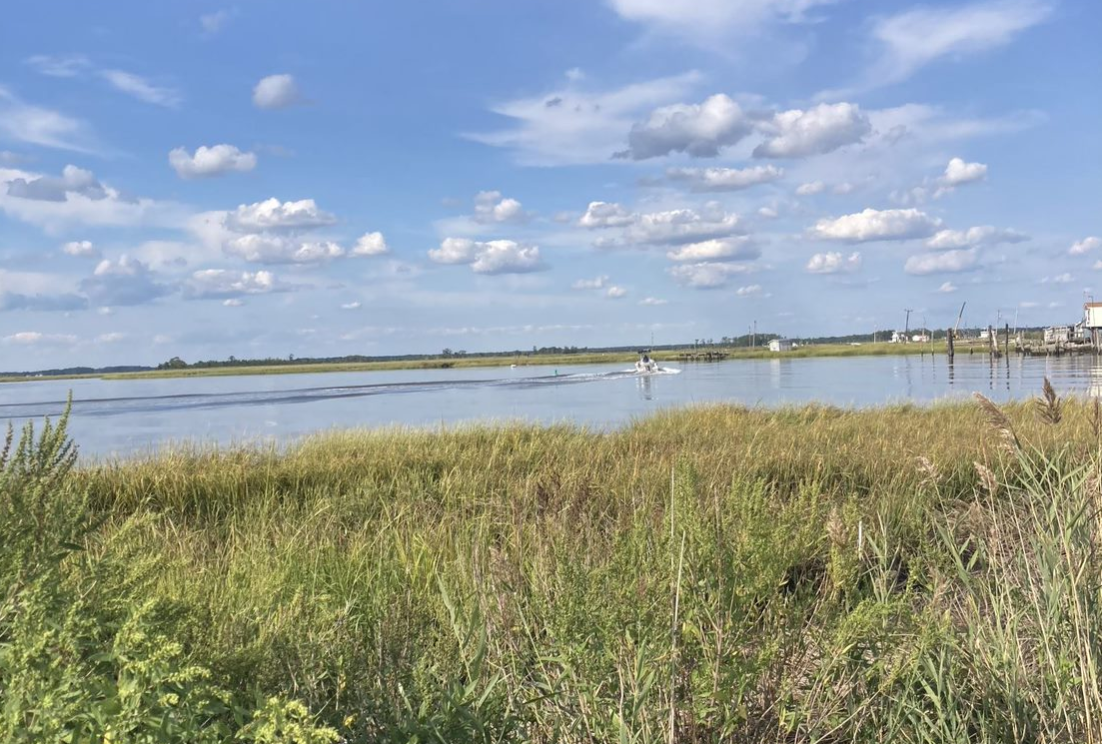
    Ten years ago, on Thursday August 25, 2016, Congressman Frank LoBiondo visited our shoreline restoration sites Money Island NJ with a delegate of state officials and members of the press.

    We had a brief few minutes to speak alone outside of the marina shop after the group presentation. He spoke mostly of his difficulties in working with the NJDEP. We both said that we are doing our best, and would continue the effort for sustainability of Money Island.

    He was the last federal elected official to visit us.

    The last time I saw him was at the Cumberland County Clerk’s Office after he left office. I was working as treasurer for a campaign committee and he was addressing an election issue as a consultant, but I do not know the details.

  • Cleanup underway

    Thanks to neighbors from Money Island and Gandy’s Beach who volunteered to help clean up storm-damaged structures at the former marina this week.

    Equipment repairs in the boat yard are paused this week as two of the workers came down with a summer virus. We expect to resume next week.

    Screenshot